
Why Flight Attendants See This Coming: What To Do When Your Carry-On Gets Gate-Checked
Gate agents check bags for reasons most passengers never see coming. Here's what's really happening behind that jet bridge announcement — and how to never get caught off guard again.
GEAR & PACKING
8/18/20265 min read
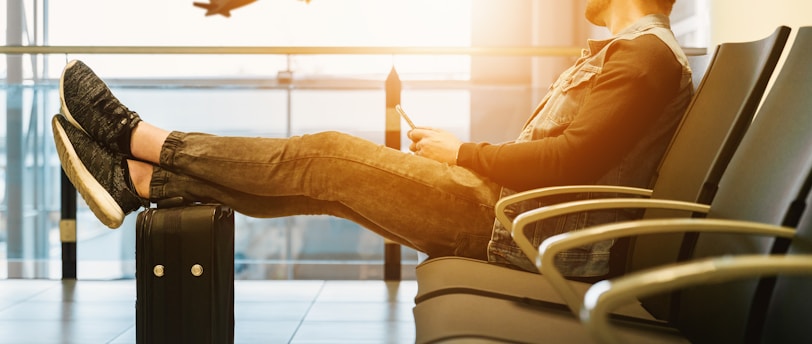

You did everything right. You measured your bag. You packed light. You even beat the boarding line. And then — the dreaded words at the jet bridge: "We're going to need to check that."
After years of working the aisle, I've watched this exact scene play out hundreds of times. Here's the insider truth: it's rarely random, it's almost never personal, and if you know what's coming, you can either avoid it entirely or handle it like a pro when it happens.
Why Gate-Checking Happens (It's Not Bad Luck)
The overhead bins fill up fast. On a full flight, bin space is first-come, first-served. Over the past several years, carry-on habits have shifted hard — more passengers than ever are trying to bring a full-size roller bag onboard instead of checking anything, often to avoid checked bag fees. The problem is that most aircraft simply weren't designed with the assumption that nearly every single passenger would bring a full carry-on. Bin space is finite and hasn't grown to match. Flight attendants have felt this shift firsthand — boarding has gotten slower and more chaotic as crews try to Tetris an ever-growing number of bags into the same amount of space, often having to gate-check bags mid-boarding just to keep things moving. So if you're in one of the last boarding groups, the bins may simply be full by the time you reach your row — regardless of how perfect your bag size is.
Your bag boarded "too late." Airlines often start gate-checking bags proactively once they sense the bins are close to capacity, sometimes even before the plane is full. Part of this comes down to how airlines have restructured their fares to manage the carry-on crunch: many basic economy or lower-tier fares no longer include a full-size carry-on at all — only a personal item that fits under the seat. Boarding zones are typically assigned in the same order as fare tiers, from highest to lowest, which means your zone number is basically a preview of your carry-on odds. If you're in Zone 4 or later, you're not just boarding later — you likely booked a fare that wasn't a priority for bin space to begin with. And if your fare falls into that lowest tier, there's a good chance a full carry-on was never included in your ticket at all, so boarding light with just a personal item isn't optional — it's the plan.
Smaller aircraft, smaller bins. Regional jets and some narrow-body aircraft simply have less overhead space. A bag that fits fine on a 737 might not fit at all on a CRJ. This is exactly why airlines set one universal carry-on size limit across their entire fleet instead of different limits per aircraft type — it's a "one size fits all" policy. If your bag fits the sizer at check-in or the gate, it's built to clear the tightest bins in the fleet, not just the roomiest ones. The catch is that a lot of travelers assume "it fit last time" means it'll always fit — but it only takes one regional jet route to prove that wrong.
Weight or size gets double-checked at the door. Gate agents sometimes do spot checks right at boarding, especially on tight or oversold flights. This is why it's worth verifying your favorite airline's exact carry-on dimensions before you buy a bag — not after. Not every carry-on marketed as "airline friendly" or "guaranteed to fit" is actually sized for every airline. Every carrier sets its own limits, and those limits aren't universal or permanent — airlines can and do change their sizing rules at any time. The safest habit: always measure your actual bag against your specific airline's current dimensions before you fly, even if it's a bag you've flown with before.
How to Prevent It (Do These Before You Get to the Gate)
Book a boarding group that gets you on early — status, a co-branded credit card, or paying for early boarding all buy you bin space.
Use the smallest bag that fits your trip. A slightly smaller carry-on has a much better shot at fitting in tight bins on regional aircraft.
Check in early and watch your app. If your flight shows as full, be proactive: board as early as your group allows and don't linger.
Have a "grab bag" system. Keep your essentials in a separate small personal item so if your roller bag does get taken, you're not caught without your phone charger, meds, headphones, or laptop.
Know your airline's specific sizer. Every airline's carry-on dimensions are slightly different — what flies on one carrier might get flagged on another.
What To Do If It Happens Anyway
Remove valuables and essentials first — always. Before you hand it over, pull out your electronics, chargers, medications, jewelry, and anything you can't replace. Gate agents expect this and will give you a moment.
Take the claim tag and photograph it. Snap a photo of the tag number and your bag before it disappears down the ramp.
Know it's usually free. Gate-checked bags (as opposed to bags checked at the counter) are typically free, even on airlines that charge for standard checked bags.
Grab it planeside, not baggage claim — usually. On most flights, gate-checked bags come back to you at the jet bridge or gate area on arrival, not on the carousel. Listen for the announcement.
Pack a mini "just in case" kit in your personal item for exactly this scenario: a phone battery pack, a set of earbuds, any medication, and a change of essentials if you're worried about a longer layover.
The Real Insider Move
At the end of the day, gate agents and flight attendants aren't trying to ruin your trip — we're trying to get 150+ people and their bags onto a metal tube safely and on time. The travelers who handle gate-checking best aren't the ones who never get selected. They're the ones who packed like it might happen, so it barely disrupts their trip when it does.
That means two things: a personal item that already has your essentials pulled out and ready to go, and a carry-on strategy that doesn't fall apart the moment your bag gets tagged.
(Shop My Picks Below)
My Store
A curated collection of my favorite finds on Amazon, organized by category to make shopping easier. These are products I personally love, use, or recommend — handpicked so you don't have to dig through endless options. This page contains affiliate links, which means I may earn a small commission on purchases made through them, at no extra cost to you.
Lightweight Backpack 20L Foldable


Light Foldable Nanobag Pack 14L Ultra Compact
Over Luggage Organizer


Set of Waterproof Compression Packing Cubes


Pack of Foldable Grocery Bags
Lightweight Drawstring Backpack Bag


TRVL Mania
Jumpseat wisdom and galley-tested gear for carry-on travelers.
Home-Journal-About-Contact
DISPATCH
info@trvlmania.com
Crew inquiries & affiliate disclaimers
© 2026 TRVL Mania-Tested across 10,000 flight hours and 500+ layovers. 🍁
GALLEY-TESTED / CARRY-ON STRICTLY